

topfivefear
Add a reviewCompany Description
What effects does 100% charging have on the health of an EV battery?
Electric car batteries are typically made to last for many years before needing to be replaced. The majority of manufacturers provide battery warranties that last between eight and ten years, or between 100,000 and 150,000 miles. Customers can feel secure knowing that the battery packs are guarantyd for a certain amount of time. In addition to saving drivers money, this lessens the vehicle’s environmental impact. The above article contains affiliate links.
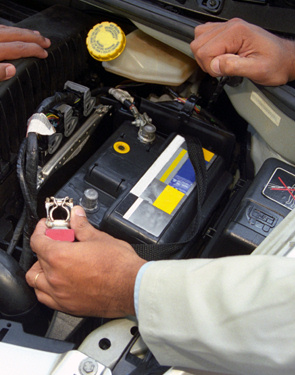 Another benefit of owning an electric car is that the batteries require comparatively little maintenance overall. Old EV batteries are currently being repurposed by many businesses to store solar energy or balance grid demand. They still have a lot of energy for stationary storage, even if they are no longer ideal for a car. Therefore, even when your car battery reaches the end of its useful life, it will be promoted to a home energy unit or a grid stabilizer rather than ending up in a landfill.
These batteries also have a second life. What a beautiful idea, isn’t it? This is a frequently asked question that requires knowledge of the technology, usage trends, and continuous improvements that affect battery life. How long do these batteries usually last? As more people think about making the switch to electric vehicles (EVs), electric car batteries have become a major topic. As technology continues to advance, we can expect to see even more improvements in battery longevity, making electric cars an increasingly appealing option for environmentally conscious drivers.
Average yearly degradation rates of about two percent or less are found in extensive studies that monitor thousands of electric vehicles. This indicates that most batteries still hold more than 80% of their initial capacity after ten years of normal driving. To put things in perspective, Tesla’s own data shows that after 200,000 miles, the Model 3 and Model Y vehicles lose only roughly 15% of their capacity, while the Model S and X perform even better at about 12%.
The battery frequently outlasts the vehicle itself, given that the typical car is retired after 150,000 to 200,000 miles. Owners can eventually modify their routines to avoid having to replace the battery, such as scheduling charging stops a little earlier or charging more frequently while traveling. It’s also important to remember that a battery with some capacity loss may still be functional. Range will decrease if the pack ends up containing less energy than when it was brand-new.
If the pack ends up holding less energy than when it was new, https://autopowercare.com/the-real-cost-of-electric-car-battery-replacement-without-warranty/ range will drop accordingly. Range reductions, however, are typically gradual, and for many drivers, the vehicle is still fully functional for daily use.